Keynote Speakers
Barry McMullin
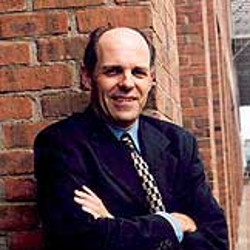
Artificial Life and the Human Predicament, Monday 9:30 a.m.
Prof. McMullin’s research activities have been focussed on problems in the dynamics of complex, network-distributed, multi-agent systems, especially the emergence and stability of symbolic representations in such systems; and, separately, on tools and techniques for making digital resources, particularly technical and educational documents and books, accessible to people with disability. Most recently, his research has focussed on global environmental challenges, including climate change and complex systems approaches to deep decarbonisation of energy supply. He is co-PI on the project IE-NETs: Investigating the Potential for Negative Emissions Technologies in Ireland, funded by the Irish Environmental Protection Agency (EPA)
Alex Penn

Artificial Life for Society: Meeting the Challenge of the Real World, Monday 5:00 p.m.
Alexandra Penn develops participatory complexity science methodologies to help stakeholders and decision makers to understand and “steer” their complex human ecosystems. She is a principal member of CECAN, the "Centre for Evaluating Complexity across the Nexus" at the University of Surrey, and works closely with the UK government to generate and apply novel, cutting-edge methods for evaluating policy for complex systems.
She also has strong interests in new management philosophies for interacting with living systems and was made a fellow of the Royal Society of Arts for her work in novel application of whole-systems design to bacterial communities.
Alex has an academic background in physics, evolutionary ecology and artificial life as well as whole systems design. As ISAL Societal Impact Chair she has a mission to bring the unique perspectives and tools of the ALIFE community to real societal challenges.
Armando Geller

Symbiotic Simulations for Decision Support, Tuesday 9:00 a.m.
Dr. Armando Geller is a computational social scientist by training. He draws his experience in human-centered design and innovation, a field in which he currently works at Spark Labs, a strategic innovation company, from applied computational decision support with industry and startups, government and non-profit clients. Amongst others, he shared his expertise in collaborative modeling with Airbus; social simulation with armasuisse; serious gaming with the Deutsche Gesellschaft für Internationale Zusammenarbeit. Armando also successfully co-founded three analytics and decision support startups. He holds a D.Phil. from the University of Zurich and taught and conducted research at the Swiss Federal Institute of Technology, the Centre for Policy Modeling at Manchester Metropolitan University, the Department of Computational Social Science at George Mason University and the Advanced Consortium on Cooperation, Conflict and Complexity at Columbia University.
Stefano Battiston
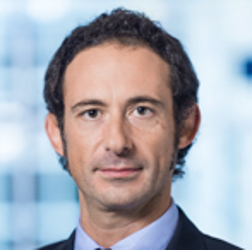
Financial Networks in the Brave New World, Tuesday 4:30 p.m.
Stefano Battiston is a leading expert in the areas of economic and financial networks, systemic risk, and sustainable finance, as reflected in several top-journal publications and EU project coordination awards. His scientific background in complex systems, combined with 15 years of research in economics and finance, put him in a unique position to understand policy issues both from a quantitative and holistic perspective. The societal and policy relevance of his research is reflected in durable dialogues with a vast network of contacts with EU policymaking institutions and stakeholders. In the recent years, he has been leading a group of 10+ people among researchers and administrative staff, and he has established the FINEXUS Center for Financial Networks and Sustainability at the University of Zurich.
Ioannis Ieropoulos
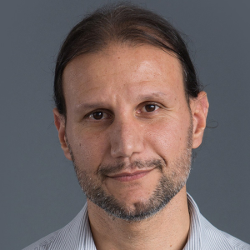
Microbial Life for Robotics towards artificial life, Friday 9:00 a.m.
Professor Ioannis (Yannis) Ieropoulos is a Professor of Bioenergy and Self-Sustainable Systems and Director of the Bristol BioEnergy Centre, at the Bristol Robotics Laboratory, UWE. He has an interest in waste utilisation and energy autonomy and produced the EcoBot family of robots, which are powered by microbial fuel cells (MFCs) fed on organic waste; the latest self-sustainable robot is Row-bot. He is a Bill & Melinda Gates Foundation grantee for the "Urine-tricity/Pee Power" project, which is advancing the MFC technology for Developing World Countries. He is also the principal investigator on a number of projects, looking also into biodegradable materials, funded by the the Leverhulme Trust and the European Commission FP-7 (EVOBLISS) as well as H2020 (Living Architecture) programmes. He has published >80 peer reviewed journal papers, has generated over £6M of research income in the last 6 years and is frequently an invited speaker at numerous conferences and workshops, such as ECS. He is a member of the EPSRC Peer Review College and the Associate Editor for the Journal of Sustainable Energy Technologies and Assessments (Elsevier).
Roberto Serra
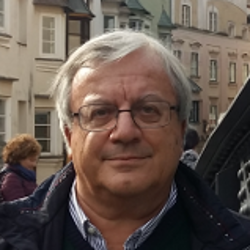
On the interplay of self-replication and self-reproduction in protocells, Wednesday 9:00 a.m.
Roberto Serra, full professor of Complex Systems at the Department of Physics, Informatics and Mathematics at the University of Modena and Reggio Emilia (just retired), is also a Fellow and a Member of the Science Board of the European Centre for Living Technologies (an international research organization in Venice) and a Fellow of the Institute for Advanced Study of the University of Amsterdam.
His research interests concern several aspects of the dynamics of complex systems, paying particular attention to biological and social systems, and to the dynamical approach to Artificial Intelligence. The most relevant recent works concern models of genetic networks and of protocells, and methods based on information theory to identify relevant sets of integrated variables in complex systems.
Kate Adamala

Biology on sample size of more than one, Thursday 9:30 a.m.
I am an expert in using bottom-up approach to making tools for synthetic biology, building synthetic minimal cell technologies, assembling cell-like structures from biochemical building blocks. My work focuses on developing and applying tools for readout of mammalian cell states and for control of cellular processes, achieved via combining in vitro biochemistry with live cell protein engineering.
Specifically, my interests involve top-down strategy of engineering protein and nucleic acid tools for gene expression quantification and control (including novel single stranded RNA binding protein); and bottom-up approaches based on developing synthetic minimal cell technology (using liposome and cell-free protein synthesis methods) to process chemical signals between mammalian cells and the environment.
Nicola Patrón
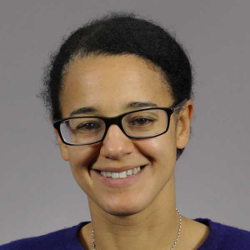
Engineering Plants for Farming and Pharming, Thursday 2:30 p.m.
Nicola Patron is a molecular and synthetic biologist interested in the natural and engineered transfer of genetic material between genomes of different species. Her lab is focused on engineering photosynthetic organisms for industrial biotechnology and crops that are healthier to consume and less environmentally damaging to cultivate.
As recipient of a 2015 SynbioLEAP fellowship, Nicola was recognised as an emerging leader in synthetic biology with a vision and aspiration to shape biotechnology for the public good. She is particularly interested the societal impacts of synthetic biology and the complex intellectual property issues that surround genetic sequences, DNA and natural products. Nicola is an advocate of responsible and ethical innovation and of open-source tools for biotechnology. She is also active in promoting diversity and inclusivity in science.